


Welcome to Grace & Greens, where we are nourishing our bodies to flourish in all that we do! This is a writing on wellness, designed to give you actionable ways to support your own journey to balanced living.
I hope you enjoy learning more from Dr. Sara Redondo, as she shares the healthy habits and rhythms that support her and her patients in living a healthier life.
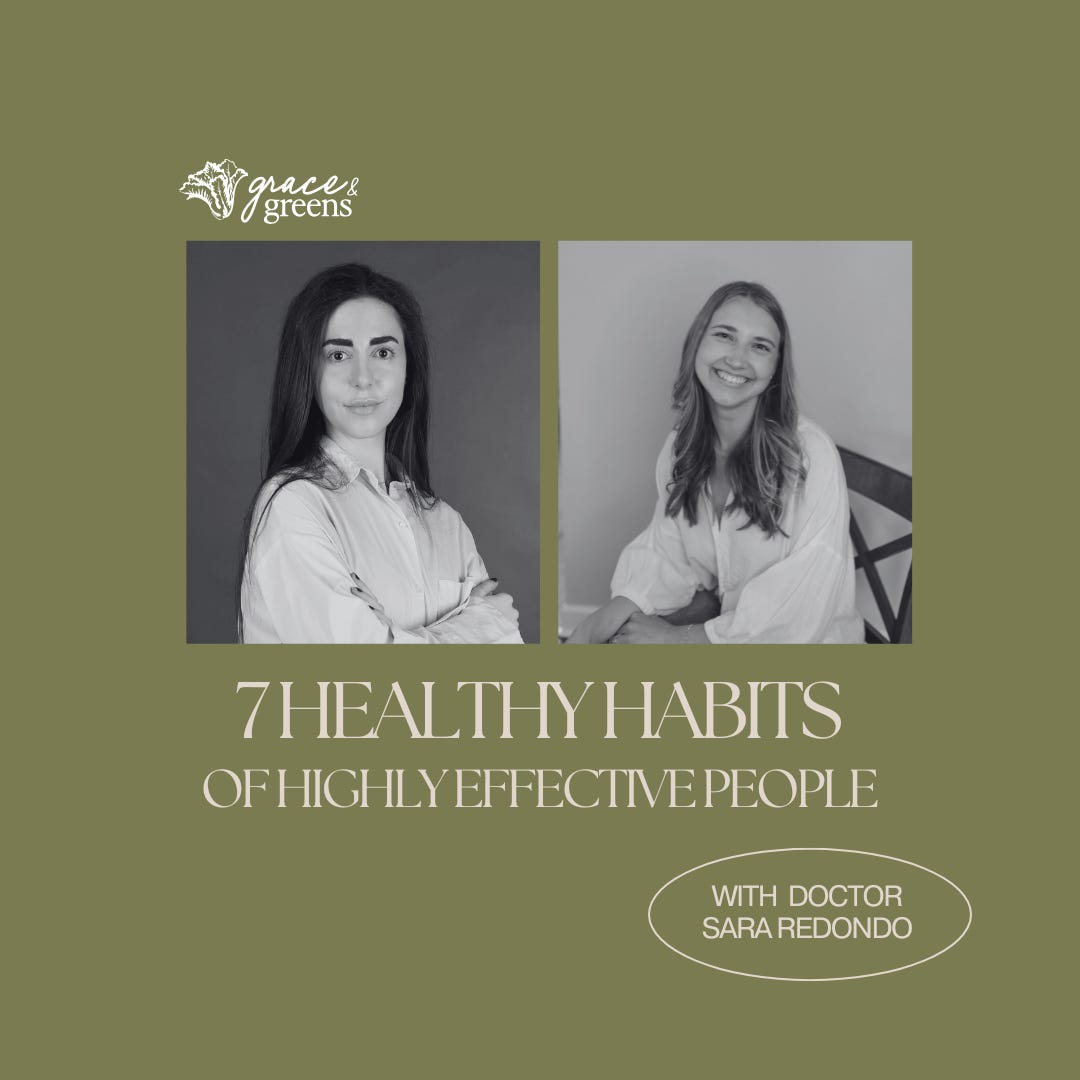
Our fifth guest is Sara Redondo, MD, MS, a medical doctor and author of Zenith Within by Dr. Sara, who has a real passion for integrative and preventative health. With over a decade of experience in both conventional and holistic medicine, Sara places an emphasis on treating the whole person, rather than just a few symptoms.
I completely agree and am thankful for doctors like Sara who are treating patients holistically! This week, we’re digging in to the habits and routines that help her stay well and help others get well too. Sara shares more about her initial turning point that led to her wellness approach, why she prioritizes a certain amount of steps, and how her beliefs about nutrition have changed over the years.
In this interview we will cover:
Why integrative health?
Sleeping - the unglamorous, but non-negotiable habit
Joy and consistency: essential components to health
The value of harmony over perfection
Choosing community that aligns with your goals
Focusing more on balance and less on extreme views
Make small, healthy choices daily that add up
Recharging the batteries when you’re low on motivation
BONUS! How healthy habits support effectiveness and an update for something coming soon
I’m so excited for you to read all about it, so let’s get into the interview!
Why integrative health?
Grace: Sara, I’m so glad to have you as part of this series! Why are you passionate about integrative health?
Sara: My personal experience in medicine is as important as my professional experience. When I was in medical school my mother was diagnosed with lung cancer. She had never smoked and her treatment options only consisted of chemotherapy, which did not work. Around that time, I came across a story about another physician with a similar diagnosis who took an integrative approach to her health—regular treatment, nutrition, movement, support for emotions and uses of other complementary therapies—and she survived.
That was a turning point for me. It made me question the narrow lens of traditional health care and confirmed my desire to provide evidence based care that is whole person-centered. I have been a patient, a doctor, a daughter and I have been in a place where I felt overwhelmed, unsupported and like I would never get better and I just needed answers beyond a prescription.
G: I can appreciate how your love and care for your mother drove you to dive deeper into what could help her better. I’m so thankful for doctors like you, who are prioritizing supporting the whole person.
Sleeping - the unglamorous, but non-negotiable habit
Grace: What’s your number one habit that is a non-negotiable?
Sara: Sleeping. It might be an unglamorous thing, but it’s completely non-negotiable for me!
When I lost my mom, I started with insomnia. And medical school and working in hospitals made it a lot worse. I slept the lowest number of hours possible for years. I know, personally, how poor sleep can affect your mood, your focus, your hormones, your health, etc.
Of course, life happens—whether it is social events, family commitments, or unforeseen stressors, sleep is potentially sacrificed. Regardless, I honor sleep and prioritize getting at least 7 hours of sleep a night (which is the minimum recommendation for my age). It’s free and it creates positive ripples in every area of wellness.
To me, sleep is sacred, and it’s the one thing I honor as the basis for everything I do!
Grace: Sleep is the foundation of everything else we do. I love how you emphasize it as a free wellness tool! While it takes effort to prioritize, especially in busy seasons, it can make a difference in how you are able to show up in those stressful times.
Joy and consistency: essential components to health
G: What does healthy living mean to you and why do you value it?
L: That is a really interesting question, Grace. I think most of us have an intuitive sense of what healthy living is—more real food, less stress, better sleep, movement, connection, and so on. But for me, there are 2 essential components, which are closely connected: joy, and consistency. No matter how healthy a thing is, if you don’t enjoy it, it is not going to stick.
Here is an example: broccoli is one of the healthiest foods on the planet. Except... I am not a fan of how it tastes. Serve it to me steamed on the side with salmon, and I’ll eat it that day. However, am I going to want to eat it that way for the rest of my life? Probably not.
So, instead I find ways to make it enjoyable. That’s how healthy habits actually become habits—if they are enjoyable. And honestly that is another way that what you are doing is so important.
Regarding why I value it?
Because I have studied and experienced what happens when we don’t have our health.
It is so easy to take for granted how lucky we are to have the ability to have this conversation, type, read words, and digest food without pain. I have seen the other side—chronic illness, suffering, and the hidden cost of preventable disease.
So I carry my best effort and do my best to stay as far away from there as I can.
Not from fear, but from love for life, love for vitality and love for people I love.
G: Very well said. Every day is such a gift and to nourish our bodies well is to be a good steward of what we are given. By looking at health and wellness not as ‘have to’s’, but as ‘get to’s, it can completely change our approach and the enjoyment we get from activities like cooking, movement, and rest.
The value of harmony over perfection
G: What are your top priorities for your health?
S: When dealing with health, I prioritize handing every step with care, precision, and humanity. When it comes to physical health, the healthcare system, and a lot of times even ourselves, put more attention to it. However, with mental health it’s completely the opposite.
During my grief, I experienced severe depression, anxiety and insomnia. You’d expect the same level of attention and follow-up as I received for my physical trauma. Unfortunately, the only “solution” offered to me was an antidepressant. That was it. No therapy, no deeper inquiry, no real support.
That contrast changed everything for me.
So now, my current top priority around health is tending to everything—the whole picture, rather than stressing about not getting the perfect exercise in one day knowing that other important health priorities would be impacted by it (sleep, nutrition, mental health/functioning). Instead of a more all-or-nothing kind of thinking about health, I’ve learned to value harmony over perfection.
G: Balance is something I think about often when it comes to health, because it seems far too easy to swing to one side or the other. But, this harmony you talk about, looking at everything holistically, ensures you don’t burn out, but instead tend to all the areas that need to be nourished well.
Choosing community that aligns with your goals
G: What communities or spaces are you involved in to nourish you?
S: There is a famous saying, usually attributed to motivational speaker Jim Rohn, that is “You are the average of the five people you spend the most time with.” And the same goes for our health.
Just think about healthy parents—they likely have children who are active, eat healthy food, and develop healthy habits early in life. You see children eating fruit and nuts in lieu of chips for snacks; or running around on the playground playing tag, rather than sitting on their phones.
We cannot help but be formed by our environment, for better or worse.
For myself, my “five” are my husband and family, my friends, my colleagues, and unexpectedly, Substack.
At home, I am focused more on the nutrition side, and my husband is the (harder-to-achieve) driving force to keep me to follow a workout regime consistently. At work, I try to have important lunch conversations with a few of my colleagues regularly while eating—many colleagues share a new recipe or health discovery regularly. Time spent with family and close friends is moving around together, sharing a meal together and being in meaningful conversations, without alcohol or tobacco.
And then there’s Substack. It has unexpectedly but deeply meaningfully become a place for me. Substack is where I meet like-minded individuals from every part of the world, who are deeply interested in living healthier, more intentional lives. Such a nice and lovely surprise, and as a source of support, motivation and joy.
G: Being shaped by our environment can be a wonderful thing, especially as we all look to learn and grow in new areas. I love your emphasis on choosing to spend time in environments and with people who push you closer to your goals of living a healthier, more intentional life. Even with the Grace & Greens community, the goal is for this to be a place of support, motivation, and joy as we prioritize living healthier, more nourished lives together.
If you’re loving this interview, stay tuned. This is part 5 of a multi-part wellness series all about healthy habits. Read parts 1 - 4 and get more details at the bottom of this blog!
Focusing more on balance and less on extreme views
G: What is a prior belief that you had about healthy living that has been changed or challenged? What do you think now?
S: So many beliefs have been challenged over the years—mainly for two reasons: knowledge evolves, and misinformation spreads fast.
As an example of this, let’s think about nutrition. In the 1960s, Ancel Keys started advocating for the lipid hypothesis (in part based on his now infamous Seven Countries Study) linking dietary fat (especially saturated fat) with higher cholesterol and an increased risk of cardiovascular disease. All fat was demonized, which in turn led to various low-fat food products to flood the market.
The USDA then presented the food pyramid in 1992 and advocated for a diet with over 60% of grains and other carbohydrates, not acknowledging ability levels or individual needs. Ironically, as fat decreased and carbohydrate increased, obesity rates soared along with confusion and frustration.
In the 1990’s, cardiologist Dr. Robert Atkins created a divergence when he suggested that chronic disease and weight gain was due to carbohydrates, not fats. Low-carb diets truly took off in popularity after he made the claim, and there began a change in the discussion of nutrition.
There has been a similar change with exercise. For years, exercise consisted solely of cardio for training as the gold standard for health while strength training was for muscular men who spent hours in the gym. We now know that we need both—cardio may lengthen your life while strength training may improve quality of life and independence as you age.
So what do I believe now?
I let go of extreme views. I eat healthy fats, healthy carbs along with cardio and strength training. I no longer vilify or glorify a food or a habit. Instead I concentrate on balance, what the science states, and what feels good and sustainable long term.
G: What a balanced, harmonious approach. Not only does this approach support a healthy body physically, but removing many of the fears around certain foods or exercise can also contribute to a better mindset and mental health.
Make small, healthy choices daily that add up
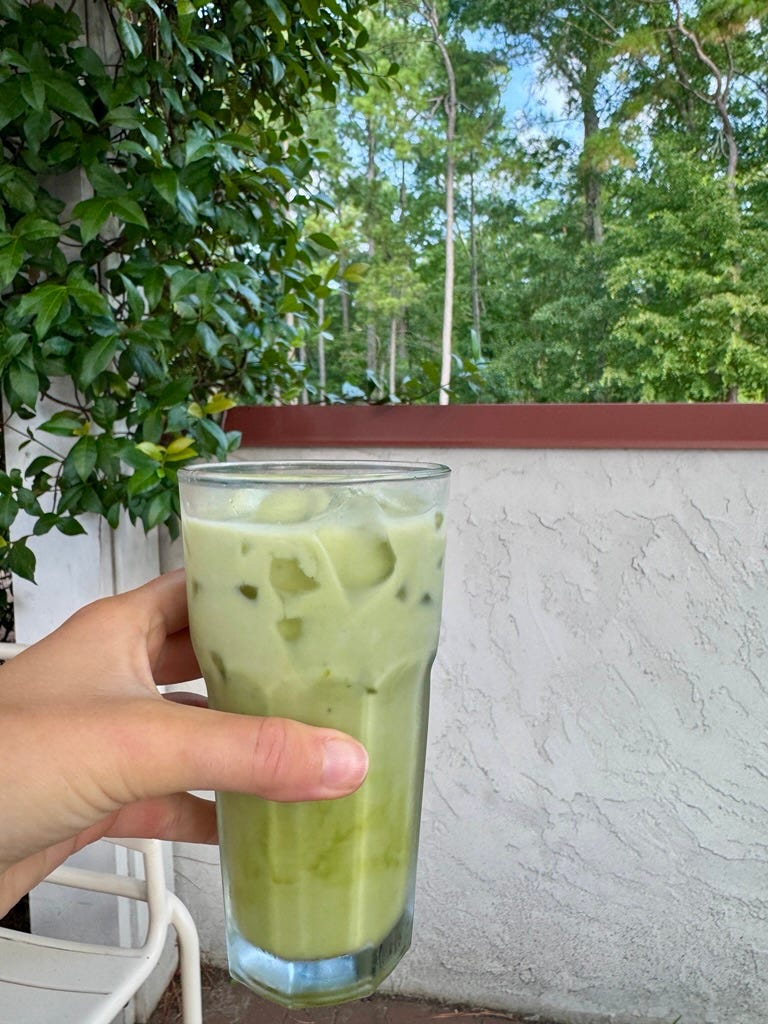
G: What’s your go-to breakfast? How do you incorporate movement daily? Are there any other habits that support you well? When you are short on time or energy, how do you innovate to support your wellness?
S: (My go-to breakfast) Depending on the day, it is different, but my usual breakfast would be something like a quick shake (almond milk, whey protein, some matcha, and cinnamon) and a piece of fruit with nuts. It’s quick, delicious, feels good, and has a combination of antioxidants, high-quality protein, fiber and healthy fats.
(How I incorporate movement daily) This is an awesome one—because even if we exercise for one hour, many of us are just spending all day sitting anyway. I work from home, so I try to make it my goal to move around as much as possible each day.
I use a step-tracking app and set a goal of at least 7,000 steps a day—which new research already indicates is sufficient for good health.
And how do I do that?
Whenever I’m on my phone—whether it’s calls, emails, checking my calendar, or scheduling meetings—I’m walking. I also walk to do my grocery shopping, and while home, any time I can do a task moving, such as brushing my teeth, I’m moving.
Sometimes I even get some light strength in, like squats while cooking, or while waiting for files to download. It all adds up!
(Supportive habits) I pay close attention to my circadian rhythms. I attempt to wake up and go to bed at the same time each day (not always easy with work or social engagements but I try!).
I try to get natural light exposure in the morning and dusk for the purpose of sleep/wake hormone regulation. And about an hour before bed, I wind down—no phone, no computer. I stretch, meditate, practice gratitude, and transition into rest. It makes a big difference.
(When time or energy has run out) I try to always have Plan B.
For food, I will keep quick and easy healthy options available for very little work that do not require a lot of time or effort.
For exercise, if I can’t get to the gym, I will have my mini movement hacks throughout the day.
For emotional wellness, I try to focus on gratitude. When I feel particularly overwhelmed or drained, I will gently remind myself: “This will pass.” and have found it an excellent way of keeping me grounded in the present time.
G: Wow, so many good reminders and tips here. It can be easy to have an all or nothing mentality when it comes to health, but the reality is that the little steps and moments of consistency add up over time. Specifically, when it comes to your plate, I love your priorities; It’s exactly what I am thinking about each time I’m making a recipe. If I can make it balanced, enjoyable, and easy, that’s a win in my book!
Recharging the batteries when you’re low on motivation

G: What do you do when you are low on motivation? Do you have any non-negotiables when it comes to your wind-down routine?
S: This is such an important question—especially for entrepreneurs.
When I’m low on motivation, I don’t try to force production. I just leave the house. A walk in nature, by myself with my thoughts, or a conversation with someone who I love, makes a huge shift.
I would return home a different energy—more grounded, more creative, and more clear.
I don’t see it as a “waste of time” which is how we often feel conditioned with the hustle-crazed culture we all live in; I see it as charging the batteries and being able to come up with better and fresh ideas.
And my wind-down routine is one of my favorite parts of the day!
I even tell my husband, “I’m starting my wind-down now,” pop in my earplugs, and begin the same steps I mentioned earlier—light stretching, meditation, gratitude, no screens, and total calm.
When I follow through with that, the quality of my sleep is incredible. The next morning I feel 100% ready to meet whatever comes my way.
G: In a hyper-productivity culture, it can be easy to get swept away with working non-stop. But, we weren’t created for that. I love your description ‘re-charge the batteries’ to slow down and prepare yourself for what comes next. I recently wrote about redefining rest as productive, knowing just how vital it is for our health.
BONUS! How healthy habits support effectiveness
G: What area are you focused on being highly effective in? How have healthy habits supported those goals? Where can people find you if they want to follow along with your journey?
S: Right now, I’m deeply focused on becoming highly effective in two areas: Substack and book publishing. That’s how I’m reaching and helping people right now—through writing, education, and building meaningful connections.
None of this was taught in medical school. So I’ve had to learn everything from scratch—writing, design, marketing, audience building, tech tools—you name it. That’s why being highly effective is essential. Healthy habits allowed me to reach these goals. I feel energized, rested and motivated to continue, despite the bumps on the road we all face sooner or later!
G: Thank you Sara for sharing more about your healthy habits and what you’ve learned to find the balance in every day life!
Be sure to subscribe to her Substack publication, Zenith Within by Dr. Sara for holistic health guidance that’s backed by science. I’m also excited to say that she is publishing a book soon, and her subscribers will be the first to know the launch date.
Thanks for reading this healthy habits interview!
Stay tuned for the upcoming Grace’s grocery guide, exclusively for paid subscribers, with a full menu of balanced and nourishing meals (plus prep tips and a grocery list), so you can save time and nourish your body well.
Here’s to a nourishing and joyful week ahead,
Grace Barker


Thank you for inviting me Grace, it was lovely to read your questions and I hope the answers help your audience. Warmly, Sara