


If you're new here — welcome! I'm Grace, a certified health coach and recipe developer. Every week I share nourishing recipes, weekly meal plans, and wellness tips. This week I'm diving into 3 Japanese longevity habits I brought home from our trip to Japan. Subscribe below so you never miss a post.
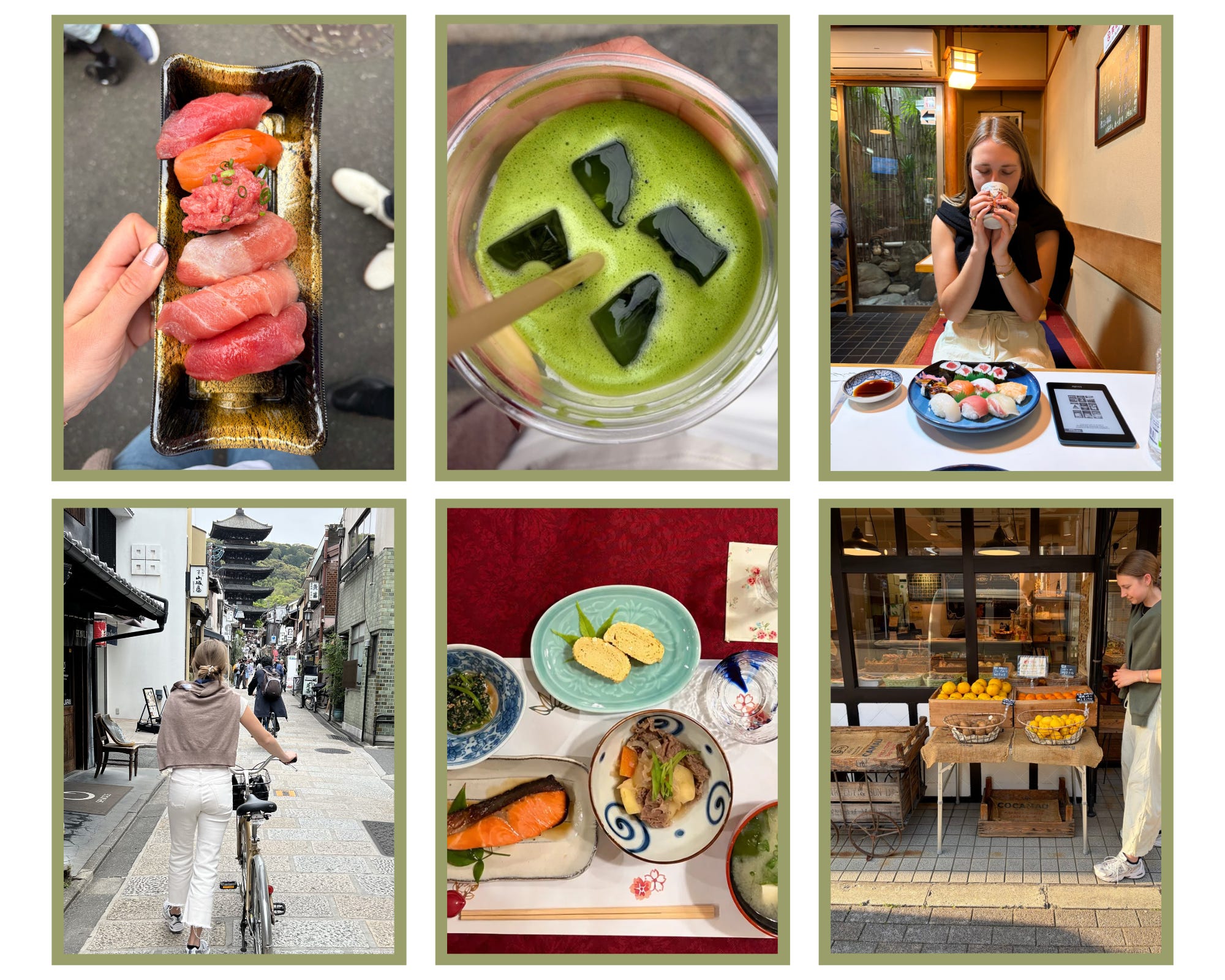
As I was navigating the train system in Tokyo, climbing flight after flight of stairs to reach ground level, I kept noticing something: men and women in their 70’s and 80’s doing the same, and doing it with ease. 1
Walking through the parks dotted with light pink Cherry Blossoms, cyclers of all ages, often with babies in tow, rode through the park commuting to their final destinations.
On every street corner, we could confidently walk in for a meal and be served a delicious and balanced spread. Often, meals were made of a bowl of savory rice, multiple smaller bowls of fresh and pickled vegetables, a protein which was often fish, and a bowl of soup all paired with a warm green or oolong tea.
As I reflected on how different this felt from daily life back home, that's when it dawned on me why the Japanese people are considered one of the healthiest countries in the world.
After spending just a few days in Japan, I realized it wasn’t the strict exercise routines or supplement line ups that were contributing to their high average life expectancy.2
Instead, it was the small, consistent habits that are built into their daily lives that aren’t just helping them live longer, but live better too.
Too often we overcomplicate what it looks like to live healthy. We stress ourselves out with doing all the “right things” only to overspend, overthink, and get completely overwhelmed.
But, it doesn’t have to be that way and the Japanese people proved that to me very quickly. No matter where you live, you can easily incorporate a few healthy habits to encourage a greater health span — not just living longer, but living better for longer.

Habit 1 — An active lifestyle built into daily life
For many Japanese people, a natural part of their day incorporates walking, biking, and moving throughout the city. Whether it’s for taking a walk to meet a friend or picking up fresh groceries, or even to drop their children off at school, everyone is on the move.
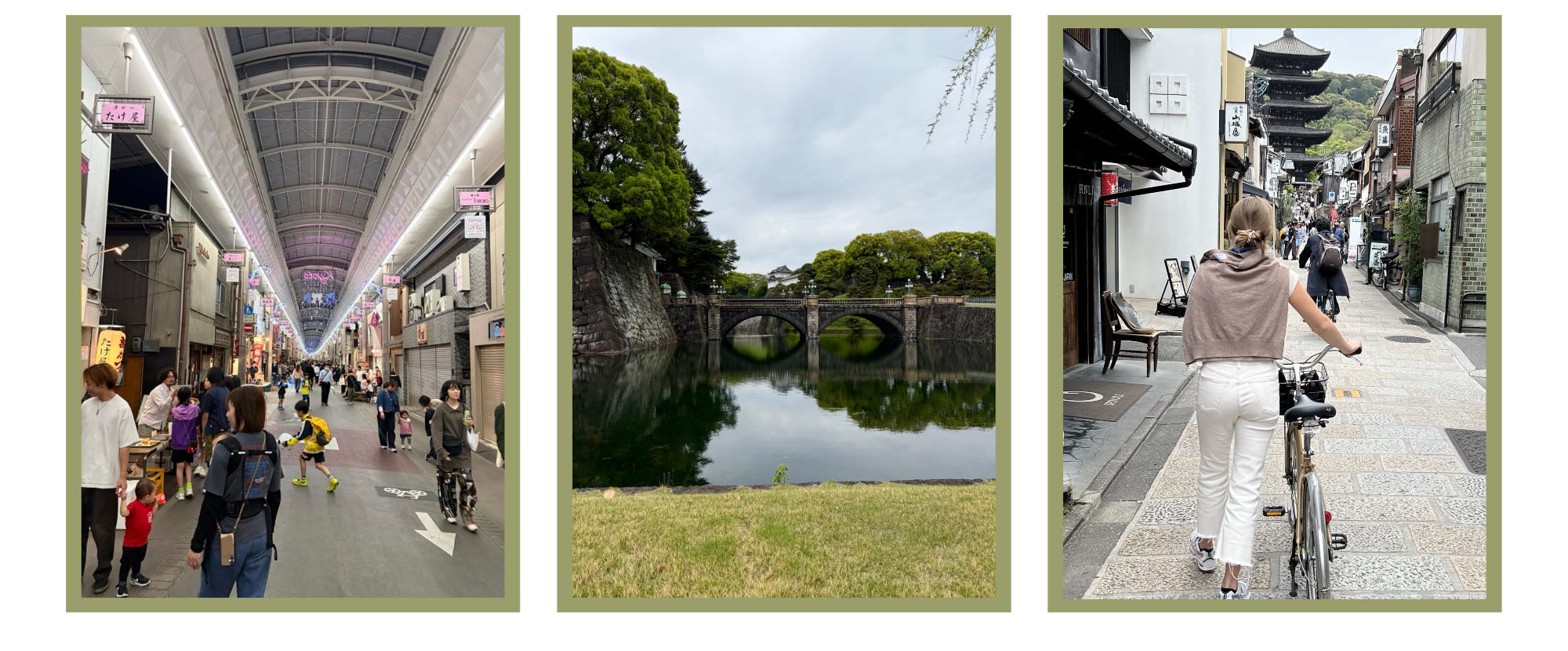
Many people rely on foot and methods of public transportation like trains and buses to travel across town. This naturally builds in more rhythms of movement, like climbing the stairs in the train station or walking to the bus stop every morning.
Whether you work from home or commute via car to work each day, sitting for long periods of time is quite common here in the US. But, making an effort to move whenever you can really goes a long way.
The benefits of regular movement:
Boosts your metabolism3
Improves mental clarity
Helps to reduce stress
Lowers the risk of chronic disease and supports long-term longevity
Increases energy levels
Since the natural rhythm of the Japanese people is living an active lifestyle, it’s no surprise to see people well into their old age, still walking the same stairs and biking the same routes as they did when they are young.
While it can be easy to rely on workout classes or hour-long sessions in the gym to move your body here at home, I don’t want us to miss out on the benefits of living actively and moving throughout the day.
Even just a little movement every hour can go a long way. As you’re reading this, if you’re feeling inspired, get up and move for a minute — stretch, take a lap, dance around! Your future self will thank you.
Habit 2 — A balanced Japanese diet rich in whole foods
As a lover of seafood and vegetables, I can honestly say I was most looking forward to dining on the delicious, local cuisine of Japan. And let me tell you — it exceeded my expectations tenfold.
With a majority of ingredients being naturally anti-inflammatory and most meals being made up of nourishing whole foods, I loved trying all the unique ways they prepare fresh fish, rice, fruits, and vegetables.
Even when dining out, every meal was prepared with care, using local ingredients to create something delicious.
Most commonly, the Japanese people enjoy set meals, with a variety of dishes being prepared and served in small bowls and plates. This style is called kobachi, which encourages enjoying a variety, portion control, and increased nutrient intake.
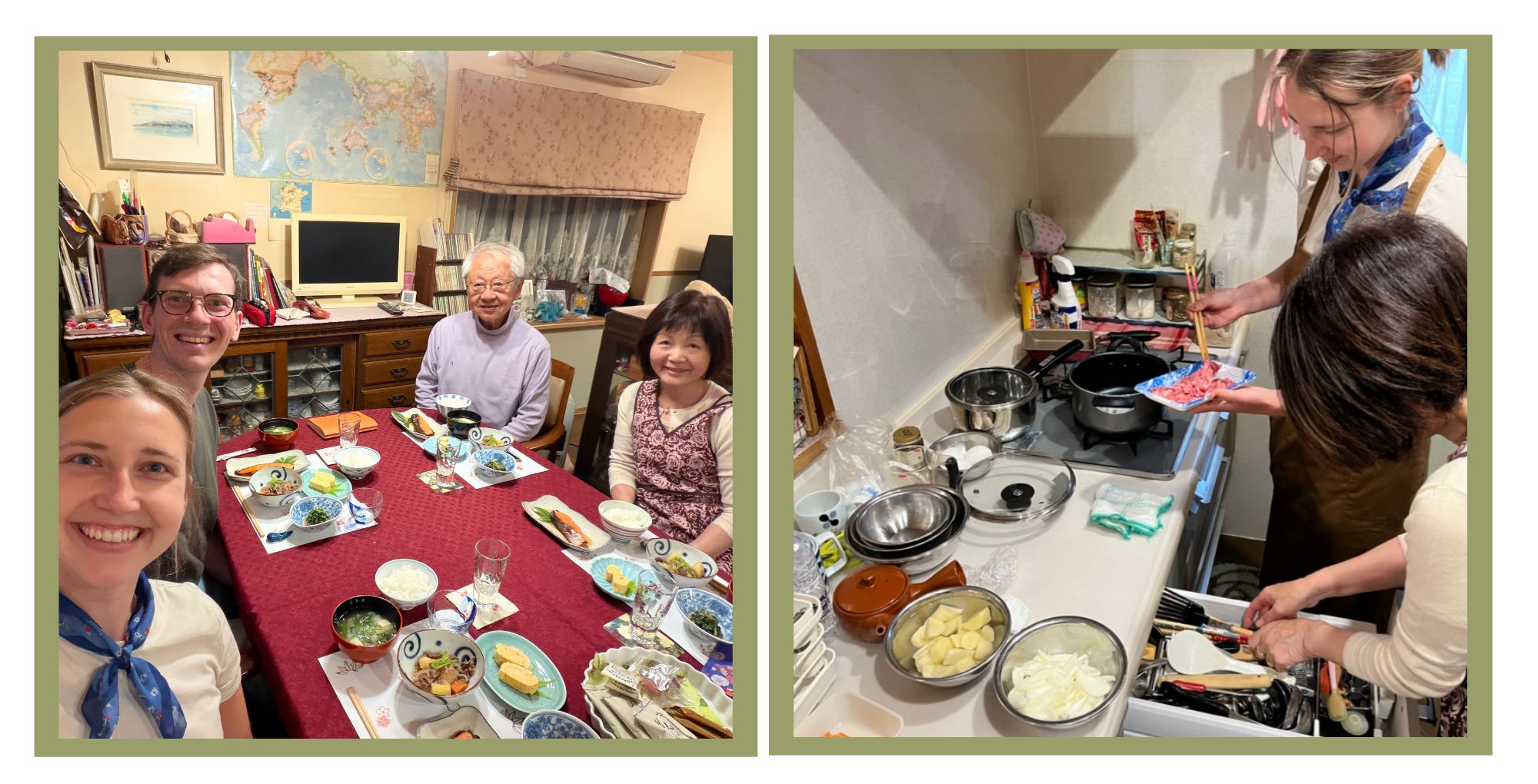
The people of Japan pride themselves on doing every task with excellence, and that includes the dishes they serve. We had the pleasure of visiting the home of Mishuyo, a Kyoto-native who is a wonderful cook, where she taught us how to make a traditional Japanese meal.
Stay tuned for some of the top techniques I learned from her and a few traditional recipes coming soon for paid subscribers!
Here’s one of the most nourishing and delicious meals we enjoyed during our time with Mishuyo, our home chef host:
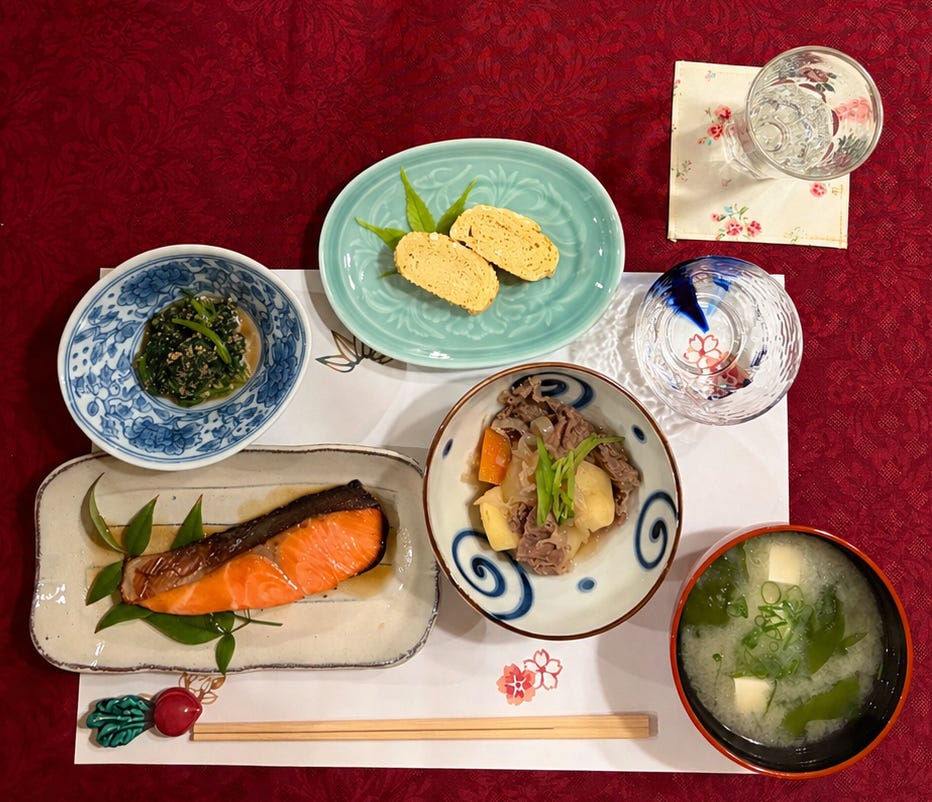
From left to right, we enjoyed Horenso no gamaae (spinach with sesame seed dressing), Sake no yuuannyaki (savory grilled salmon), Dashimaki tamago (a rolled dashi omelet), Nikujyaga (simmered beef and potato), and Miso soup. We enjoyed this meal with a warm white rice.
After being in Japan for just a few days, I realized why rice was paired with every meal (including breakfast!). Not only is it a local and sustainable crop, but it is super versatile and pairs well with a variety of protein and vegetables to make them more satisfying. When you’re walking and moving all day long, the carbohydrates in rice offer the much-needed boost of energy too.
But rice is just a small part of every set meal. While gut health has become quite popular in the US recently, the Japanese people have been eating nourishing, gut-friendly foods for many years.
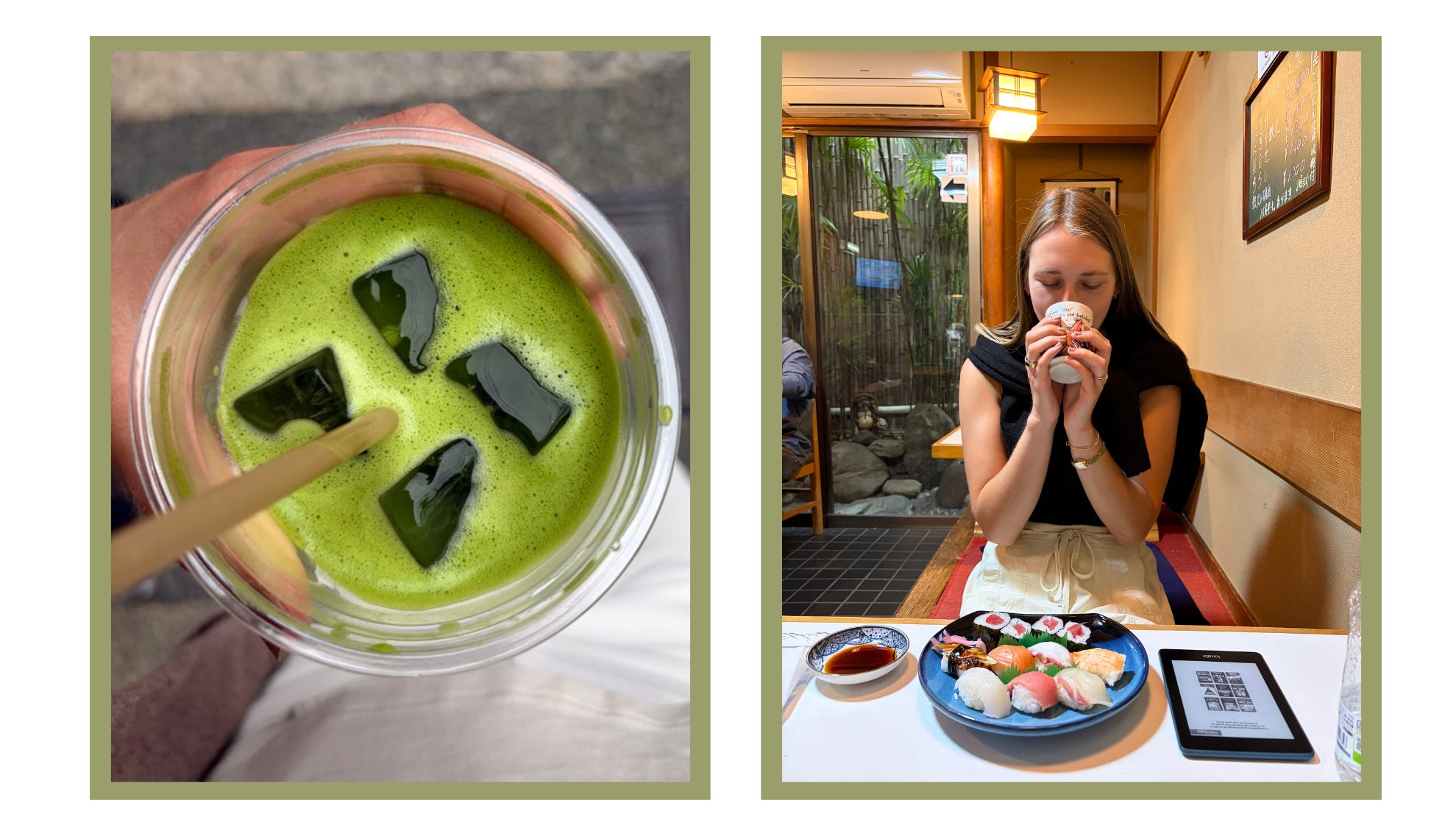
Many set meals include Japanese superfoods, directly linked to longevity, gut health, and reduced inflammation — and most of them are easy to find at your local grocery store.
Japanese superfoods:
Miso soup — Often served with every meal, this warming broth supports healthy digestion, reduces inflammation, and actively supports overall gut health.
Seaweed — Served in soups, wrapped around sushi, and as a side dish marinated in sauce, this is a nourishing ingredient rich in calcium, fiber, and iodine.
Matcha — Known for its antioxidants, iced and hot matcha tea are made of green tea leaves that offer a more natural caffeine boost.
Edamame — These soybeans are an incredible snack, rich in fiber and protein.
Tofu — Commonly served as a side dish and in soups, tofu is a low-calorie and high-protein addition to a meal that easily takes on the flavor of any sauces and seasonings.
Daikon radish — Served in almost every meal, this root vegetable is quite versatile and rich in fiber.
Warming foods, such as tea and soup, are served at every single meal to support digestion, enhance circulation, support mental well-being, and boost overall energy levels. This ties directly with Traditional Chinese Medicine, and how the foods you eat can support everything from hormones to digestion, and overall quality of life.
Not only is the Japanese diet rich in nutrients, but many of the dishes are relatively lower in calories (excluding fried foods), making it easier to enjoy a moderate amount of food and feel satisfied.
It’s often the ultra-processed and fried foods that can skew the amount of calories you consume in a day, which can often lead to weight gain, lack of energy, and a lot of other problems when it comes to health.
By filling up your own plate with a variety of whole foods, you too can enjoy the benefits of nourishing and balanced meals that support your overall health and longevity.
Habit 3 — Building a strong community
Some of my favorite moments in Japan were witnessing families gathering together in a park to share or a meal or commuting together on bikes, often with one or two children in tow. Even Mishuyo, our cooking host, shared with me that her time has been filled with taking care of her elderly parents lately.
With an emphasis on connection, the Japanese people greatly value spending time with and supporting their family. Multi-generational homes, holding elders in high regard, and placing an emphasis on gathering are quite common in the Japanese culture.
While Americans often value personal achievement and success, sometimes at the expense of connection and family, the Japanese people reminded me just how valuable it is to support your community and care for your loved ones well.
Not only is this beneficial for the overall well being of your loved ones, but connection offers great benefits for health and longevity too. From improved mental health to decreased risk for chronic disease, there are so many beautiful benefits we gain when we gather.
Building strong communities happens through investing time and effort into caring for those around you.
Supporting one another and serving the community is integral to a Japanese concept called ikigai, which means reason for being. Many feel that connection within community contribute to their greater purpose, which supports overall health and wellbeing too.
This came as no surprise to me, knowing all of us are built for community. Community can foster a sense of belonging which reduces stress levels and can even encourage living a healthier lifestyle.
Taking the time to slow down and connect can happen no matter where you are in the world. Invite your neighbor over for a cup of tea, meet your friends in the park to share a meal or sign up for a local tennis club to connect with those around you.
It’s through regular and shared experiences that foster community and connection. By adding something to your calendar and making a little effort to spend time with people, it can really make a big difference in your health and wellbeing, and the wellbeing of those around you.
How to bring the Japanese diet and lifestyle habits into your everyday life
One of my favorite parts of traveling is being able to bring home what I learned and incorporate it into daily life (and of course, share it with you!) While I was quite inspired by the daily habits of the Japanese people, none of them were so unattainable or difficult that they can’t be brought into my home or yours.
Here are a few of the small ways I’ve already started incorporating these rhythms into daily life:
Drinking warm water with lemon in the mornings to support healthy digestion.
Incorporating more regular movement, even if it’s a stroll around the neighborhood or a few minutes of stretching every day to support longevity.
Pairing meals with fermented vegetables like kimchi, pickles, and sauerkraut to support gut health.
Enjoying a cup of tea with a friend to encourage strong community while adding in a boost of antioxidants to support overall health.
Serving meals in small bowls and plates, to encourage balance and nutrient-variety.
Healthy habits work because they are small enough to fit in daily life, while being impactful enough that you keep returning to them.
While none of these habits are groundbreaking, I think we all can learn a lot from the Japanese culture and the ways that people are not only living longer but living healthier for longer.
I so greatly enjoyed my time in Japan and South Korea, and am excited to share more with you about our travels — including everything we ate, explored, and enjoyed!
Which of these healthy habits resonated with you the most? Let me know in the comments!
Stay tuned for the upcoming grocery guide — Every Saturday, my paid subscribers get a full weekly meal plan and grocery guide inspired by nourishing habits like these. If you want to bring more of this into your kitchen, join the community today!
Wishing you a nourishing and joyful week ahead,
Grace Barker


P.S. Would you give this post a ❤️ or 🔄 if you found it valuable? It helps more people find me, so they too can live healthier, more nourished lives!
Disclaimer: Please note that the information provided here is based on my own experiences only and should not be considered as personalized nutrition advice. I am not a registered dietitian and cannot provide medical or dietary guidance for specific health conditions. Always consult with a qualified healthcare professional before making any significant changes to your diet.
Affiliate Disclaimer: Some of these resources may contain affiliate links. I only share things I truly stand behind. If you use these links to buy something, I may earn a commission.
https://worldpopulationreview.com/country-rankings/healthiest-countries#:~:text=According%20to%20the%20Legatum%20Prosperity%20Index%20Health,(1st)%2C%20Japan%20(2nd)%2C%20and%20South%20Korea%20(3rd).
https://www.health.harvard.edu/heart-health/why-you-should-move-even-just-a-little-throughout-the-day
Japan would be a dream, so thrilled for you! I would eat my weight in tofu 😂👏👏👏
How did you go about finding a host family to stay with?